


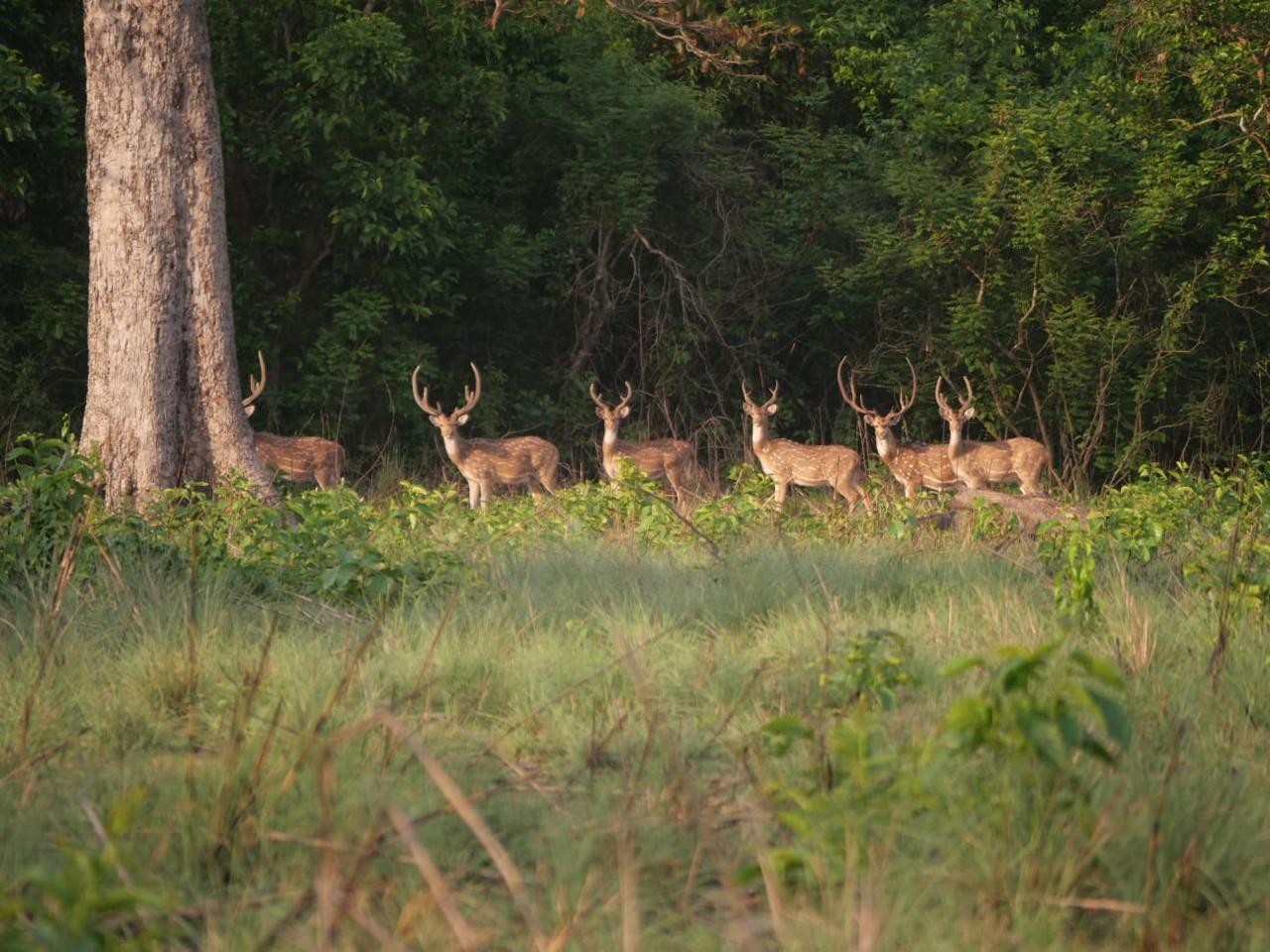
If you are planning a wildlife safari in Nepal, two names will almost certainly appear on your list: Chitwan National Park and Bardiya National Park.
Both are home to Bengal tigers, one-horned rhinoceroses, wild elephants, crocodiles, deer, and hundreds of bird species. Both offer jungle safaris, nature walks, river experiences, and opportunities to experience the culture of communities that have lived alongside these forests for generations.
So, Bardiya vs Chitwan — which one should you choose?
The answer depends on what you want from your trip.
Chitwan is the more established and accessible wildlife destination. It is Nepal’s first national park, a UNESCO World Heritage Site, and one of the country’s most popular safari destinations. Bardiya, meanwhile, offers something different: a quieter, more remote, and immersive experience in one of Nepal’s largest and most important wildlife landscapes.
If your idea of a perfect safari involves getting away from crowds, spending more time in nature, and experiencing wildlife in a less commercial setting, Bardiya deserves a serious look. Let’s break down the differences.
Bardiya vs Chitwan at a Glance
| Bardiya National Park | Chitwan National Park | |
|---|---|---|
| Location | Western Terai, Nepal | South-central Terai, Nepal |
| Character | Remote, quiet, and wilderness-focused | Accessible, established and lively |
| Area | 968 km² | 952.6 km² |
| Famous for | Tigers, wild elephants, river wildlife, wilderness | One-horned rhinos, tigers, rich biodiversity |
| Tiger population | 112 in the 2026 census | 145 in the 2026 census |
| Rhino experience | Possible, but less predictable | One of Nepal’s strongest rhino destinations |
| Birdwatching | Excellent | Excellent |
| River experiences | Karnali and its tributaries | Rapti and Narayani |
| Gangetic dolphins | Yes, particularly around the Karnali | Not a major Chitwan safari highlight |
| Atmosphere | Quiet and uncrowded | More developed and tourist-oriented |
| Best for | Wildlife enthusiasts, photographers, nature lovers, and travelers seeking solitude | First-time safari visitors and travelers prioritizing convenience |
The two parks are remarkably similar in size. Bardiya covers about 968 square kilometers, while Chitwan National Park covers about 952.6 square kilometers. But visiting them can feel very different.
1. Bardiya vs Chitwan: The Biggest Difference Is the Experience
The most important difference between Bardiya and Chitwan isn’t necessarily the animals you can see. It is how you experience them.
Chitwan has been a major tourism destination for decades. Its accessibility, established infrastructure, and international reputation have made it one of Nepal’s most popular wildlife tourism destinations. The park has multiple entrance points, a large selection of hotels and resorts, and a well-developed tourism ecosystem.
Bardiya feels different.
Located in western Nepal, Bardiya is farther from the country’s main tourist circuit. Reaching it takes more effort, but that distance has helped preserve a sense of wilderness many travelers seek today.
The Nepal Tourism Board describes Bardiya as one of the country’s more pristine conservation areas and highlights its extensive Sal forests, riverine forests, and grasslands. In simple terms: Chitwan is the classic Nepal safari. Bardiya is the quieter wilderness experience.
2. Wildlife: Both Are Exceptional, But the Highlights Differ
You won’t be disappointed by the wildlife in either park.
Chitwan is particularly famous for its greater one-horned rhinoceros, Bengal tiger, and gharial crocodile. The park also supports deer, wild boar, gaur, leopards, wild dogs, and numerous other species. Nepal Tourism Board currently lists 56 mammal species and 525 bird species for Chitwan.
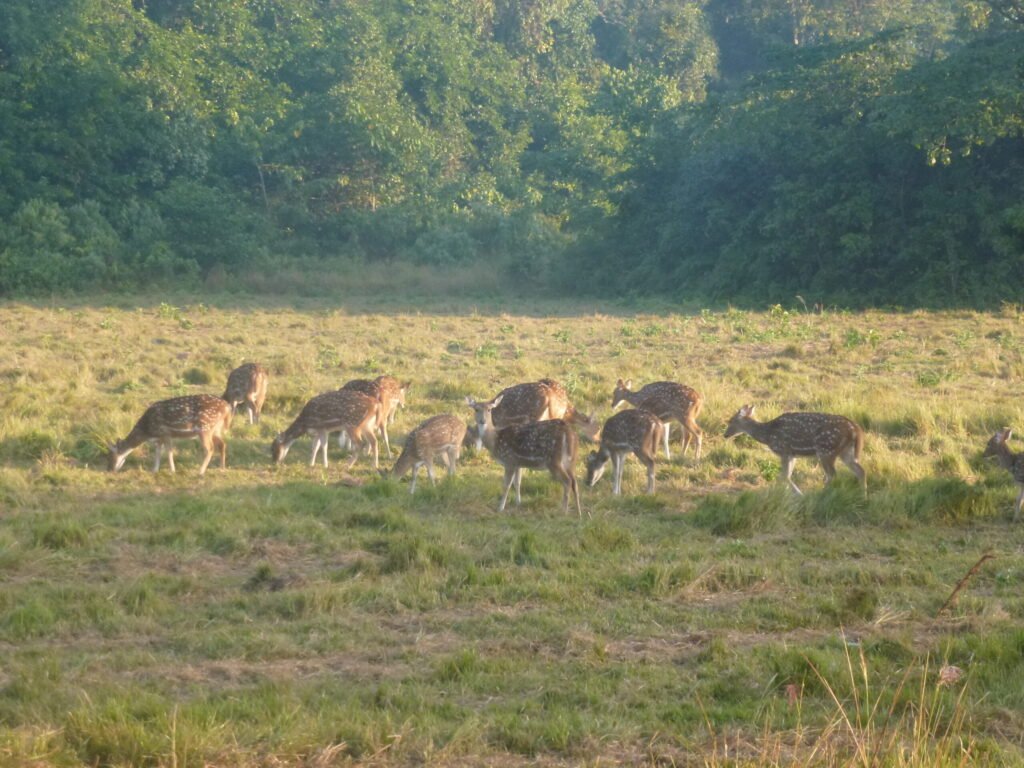
Bardiya has its own impressive wildlife list, including Bengal tigers, one-horned rhinos, wild elephants, swamp deer, blackbuck, gharials, and marsh mugger crocodiles. The Karnali River also provides habitat for the endangered Gangetic dolphin.
This gives Bardiya an interesting advantage for travelers who want more than the traditional tiger-and-rhino safari. You can spend a morning looking for a tiger, explore grasslands for deer and antelope, watch birds along the river, and potentially encounter elephants or even Gangetic dolphins during a river excursion.
This variety makes Bardiya feel less like a single-purpose safari destination and more like a wilderness landscape to explore.
3. Tigers: Bardiya Has Earned Its Reputation
For many wildlife travelers, the Bengal tiger is the ultimate prize. Both parks are important tiger habitats with strong conservation histories.
According to Nepal’s latest national tiger census released in 2026, Chitwan recorded 145 tigers, while Bardiya recorded 112. This means Chitwan currently has the larger tiger population.
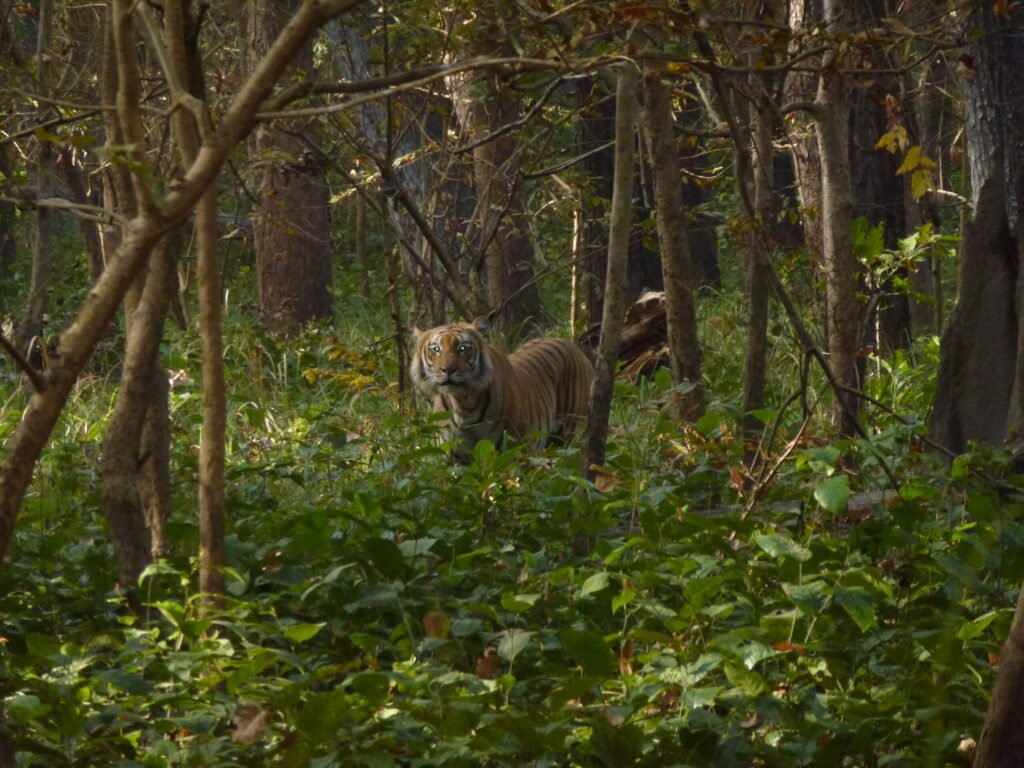
However, the story becomes more interesting when you look at the longer-term conservation picture. In 2009, Bardiya’s estimated tiger population was just 18. By 2022, that number had risen to 125. The Department of National Parks and Wildlife Conservation describes this as an almost seven-fold increase and notes Bardiya’s exceptional conservation performance.
The 2026 figure of 112 represents a decline from the 2022 estimate, so it would be inaccurate to claim that Bardiya currently has more tigers than Chitwan. But Bardiya remains one of Nepal’s most important tiger landscapes. And for visitors, another factor matters: the safari experience itself.
In a quieter landscape, tracking a tiger can feel less like following a tourist circuit and more like reading the forest. Your naturalist may follow pugmarks, alarm calls, movement through tall grass, or signs left along a riverbank. That is a very different kind of wildlife experience.
4. Rhinos: Chitwan Has the Clear Advantage
If your number-one goal is to see a greater one-horned rhinoceros, Chitwan is arguably the safer choice.
Chitwan is internationally recognized for its rhino population. UNESCO describes the park as one of the world’s important remaining habitats for the greater one-horned rhinoceros and notes that it contains the world’s second-largest population of the species.
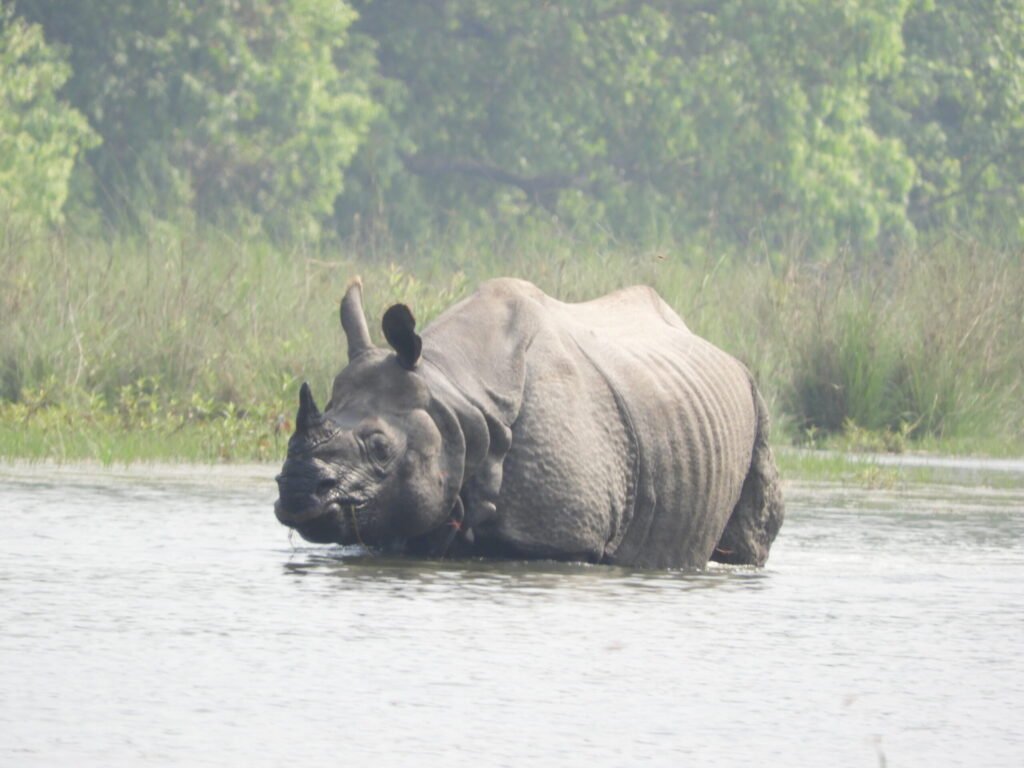
Bardiya also has rhinos, and the species has actually been reintroduced there from Chitwan over several decades. The Bardiya National Park authorities record multiple rhino translocations from Chitwan beginning in 1986.
So Bardiya should not be considered a place without rhinos. The difference is simply that Chitwan is the stronger choice if rhinos are the main reason for your safari.
If you want a broader wildlife experience, however, Bardiya’s combination of tigers, elephants, deer, birds, reptiles, and river wildlife makes it particularly compelling.
5. What About Wild Elephants?
Wild elephants are another reason Bardiya stands out.
The park’s forests and grasslands provide habitat for wild elephants, alongside species such as swamp deer and blackbuck. Nepal Tourism Board specifically lists elephants among Bardiya’s key wildlife attractions.
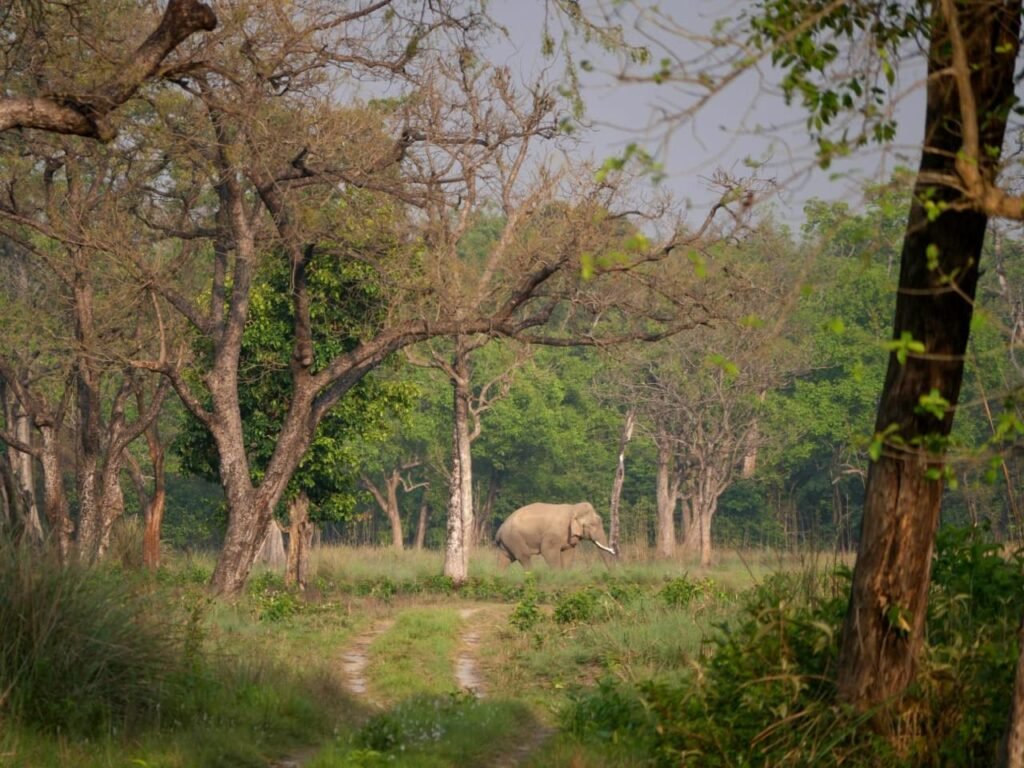
Chitwan also has wild Asian elephants, but its tourism identity is more strongly associated with rhinos, tigers, and the Rapti River ecosystem.
For wildlife enthusiasts who want to see a broader range of large mammals, Bardiya can offer a particularly rewarding safari.
You can also see wild elephants migrate around the Nepal-India border through the jungles—specifically, the Khata Wildlife Corridor. You can often see this from Bardiya Nature Lodge, which lies in the corridor itself.
6. Bardiya Has Something Chitwan Doesn’t: The Karnali River
One of Bardiya’s greatest strengths is its relationship with the Karnali River, Nepal’s longest river. The river and its surrounding landscape add another dimension to a trip to Bardiya.
Depending on conditions and location, visitors can experience river activities, observe birds, and look for crocodiles and the endangered Gangetic dolphin. Nepal Tourism Board specifically highlights the possibility of seeing Gangetic dolphins in the Karnali.
This is one of those experiences that can make Bardiya feel distinct from a conventional jungle safari. You are not simply entering a forest to look for animals. You are exploring an interconnected landscape of forest, grassland, river, and village.
7. Birdwatching: Both Parks Are Excellent
Bird lovers have good reasons to visit both destinations.
Chitwan has recorded more than 500 bird species, including resident and migratory birds. Its combination of forests, wetlands, rivers, and grasslands creates diverse habitats for birdlife.
Bardiya is also an exceptional birding destination. Nepal Tourism Board highlights species such as the Bengal florican, lesser florican, silver-eared mesia, and sarus crane. The national park authorities record hundreds of resident and migratory bird species.
For casual travelers, birdwatching can become an unexpected highlight of a Bardiya trip. For serious birders, it can be the reason to stay longer.
8. Crowds: This Is Where Bardiya Really Changes the Equation
This is perhaps the biggest practical difference between Bardiya and Chitwan.
Chitwan’s popularity is one of its strengths. The park has a large tourism infrastructure, particularly around Sauraha. Travelers have plenty of accommodation, restaurants, guides,s and activities to choose from.
But popularity naturally means a busier tourism environment.
Bardiya receives fewer visitors and has a much more remote character. That matters because you don’t experience wildlife only through the animals themselves. It is also experienced through silence.
- A quiet forest.
- A jeep stopping because your naturalist has noticed movement in the grass.
- The sound of birds instead of engines.
- A sunset without a crowded viewpoint.
- Walking through a village where daily life still feels connected to the surrounding landscape.
For travelers who value solitude, this is one of Bardiya’s strongest advantages.
9. Getting There: Chitwan Wins on Convenience
Chitwan fits naturally into many Nepal itineraries because it is relatively close to Kathmandu and Pokhara and has established road and air connections. Nepal Tourism Board lists Bharatpur as the nearest airport, with the park headquarters at Kasara around 21 km away.
Bardiya requires a little more planning. The most convenient route for many travelers is to fly from Kathmandu to Nepalgunj and then continue by road. Nepal Tourism Board lists Nepalgunj as approximately an hour’s flight from Kathmandu, followed by a road journey toward Bardiya.
And this is worth thinking about differently. The extra journey is not simply a disadvantage. It is part of why Bardiya still feels removed from Nepal’s busiest tourism routes.
You don’t go to Bardiya because it is the easiest place to reach. You go because it is worth going further for.
10. Culture: Both Destinations Offer More Than Wildlife
Don’t view either Bardiya or Chitwan as just national parks. They are living cultural landscapes.
The Tharu communities have deep historical connections with the Terai, and both destinations offer opportunities to learn about local culture, food, traditions, and village life.
Chitwan has a well-established tourism infrastructure around Tharu cultural experiences. Bardiya offers a more intimate opportunity to experience village life alongside the wilderness, particularly around communities bordering the national park.
This is another reason to avoid treating a safari as simply “drive around and look for animals.” The best wildlife trips connect nature, people, and place.
11. Which Is Better for You: Bardiya or Chitwan?
There is no universal winner.
Choose Chitwan if:
- You have limited time in Nepal.
- Easy accessibility is important.
- Seeing rhinos is your top priority.
- You want more options for hotels, restaurants, and tourist services.
- You are visiting Nepal for your first safari and want the classic experience.
- You want to combine your safari easily with Kathmandu or Pokhara.
Choose Bardiya if:
- You want a quieter and more remote wildlife experience.
- Tigers are high on your wishlist.
- You enjoy nature walks and slower exploration.
- You want excellent birdwatching opportunities.
- You want to experience wild elephants and river wildlife.
- The idea of seeing the endangered Gangetic dolphin excites you.
- You prefer smaller, more intimate lodges.
- You want to experience the Terai beyond the usual tourist circuit.
- You value silence, space, and a stronger feeling of being in the wilderness.
And if you have enough time, there is an even better answer: Visit both.
Chitwan and Bardiya aren’t competing copies of one another. They are two different windows into Nepal’s Terai ecosystem.
Why Stay at Bardiya Nature Lodge?
Once you’ve decided on Bardiya, the next question is where to stay.
This is where choosing the right lodge matters. A wildlife destination is only as memorable as the experience you have between your safari activities.
At Bardiya Nature Lodge, the philosophy is simple: Nature is the new luxury. Bardiya Nature Lodge is a small, family-owned wildlife lodge located along the Khata Migration Corridor, on the edge of the Tharu village of Khaireni and beside the Aurahi River, a tributary of the Geruwa-Karnali system.
The Khata Migration Corridor (also known as the Khata Wildlife Corridor) is a transboundary wildlife corridor connecting Nepal’s Bardiya National Park and India’s Katarniaghat Wildlife Sanctuary. It lies along the Nepal-India border in western Nepal, in Bardiya. Its length is about 13-15 kilometers. The corridor is actively used by wild animals like Bengal tigers, one-horned rhinos, asian elephants, leopards, deer, langurs, and birds to travel from one jungle to the other.
That setting is important. You are not simply booking a hotel room near a national park. You are staying within a landscape where wildlife, river, village, and forest come together.
The lodge’s architecture also reflects the place. Its rooms draw inspiration from traditional Tharu homes, and the property incorporates reclaimed materials from old Tharu houses. The lodge also emphasizes local employment, conservation, composting, mindful resource use, and community connection.
Accommodation includes Tharu-inspired cottages such as Chuli Ghar and the elevated Attuwa Tower House, designed to combine comfort with a close connection to the surrounding landscape.
And then there are the experiences. Guests can explore Bardiya through jeep safaris, guided nature walks, sundowners, birdwatching, local river experiences, night gazing, silence sessions, and cultural experiences.
The idea is not to rush through Bardiya. It is to experience it.
- Wake up to birds.
- Spend the morning looking for wildlife with a knowledgeable naturalist.
- Return for a relaxed meal.
- Walk through the surrounding village.
- Watch the light change over the landscape.
- And end the day under a sky far removed from the noise and lights of the city.
That is the kind of stay that makes Bardiya different.
Bardiya vs Chitwan: The Final Verdict
So, is Bardiya better than Chitwan?
Not necessarily.
Chitwan is an extraordinary national park and deserves its reputation. It is accessible, rich in biodiversity, internationally recognized, and particularly strong for rhino sightings.
But Bardiya offers something increasingly rare: space. Space to explore. Space to listen. Space to experience wildlife without feeling rushed. Space to connect with local culture. And space to simply be in nature.
For travelers who want convenience, Chitwan may be the right choice. For travelers who want a deeper sense of wilderness, Bardiya may be the journey worth taking.
And when you choose Bardiya, choosing a place like Bardiya Nature Lodge allows the stay itself to become part of the experience—not just a place to sleep between safaris.
Because sometimes the best luxury isn’t a bigger room or a longer list of amenities. Sometimes, the best luxury is silence, space, and the feeling that you have temporarily stepped away from the rest of the world.
Nature is the new luxury.
Frequently Asked Questions
Which national park is better for a first-time visitor to Nepal?
Chitwan’s proximity to Kathmandu and established tourism infrastructure typically make it the easier first stop. Bardiya rewards travelers with more time and a stronger focus on wildlife.
Can I visit both Bardiya and Chitwan on one trip?
Yes. Many travelers combine the two, often pairing Bardiya with a visit to Lumbini or other western Nepal destinations to make the longer journey worthwhile.
Does Bardiya have more tigers than Chitwan?
Not currently. Nepal’s 2026 national tiger census recorded 145 tigers in Chitwan and 112 in Bardiya. Bardiya still holds the second-highest tiger population in the country, and its lower visitor numbers mean less competition for each sighting.
Is Bardiya safer than Chitwan for wildlife viewing?
Both parks are considered safe when visited with a licensed guide. Tigers generally avoid humans, and experienced naturalists understand animal behavior and safety protocols in both locations.