


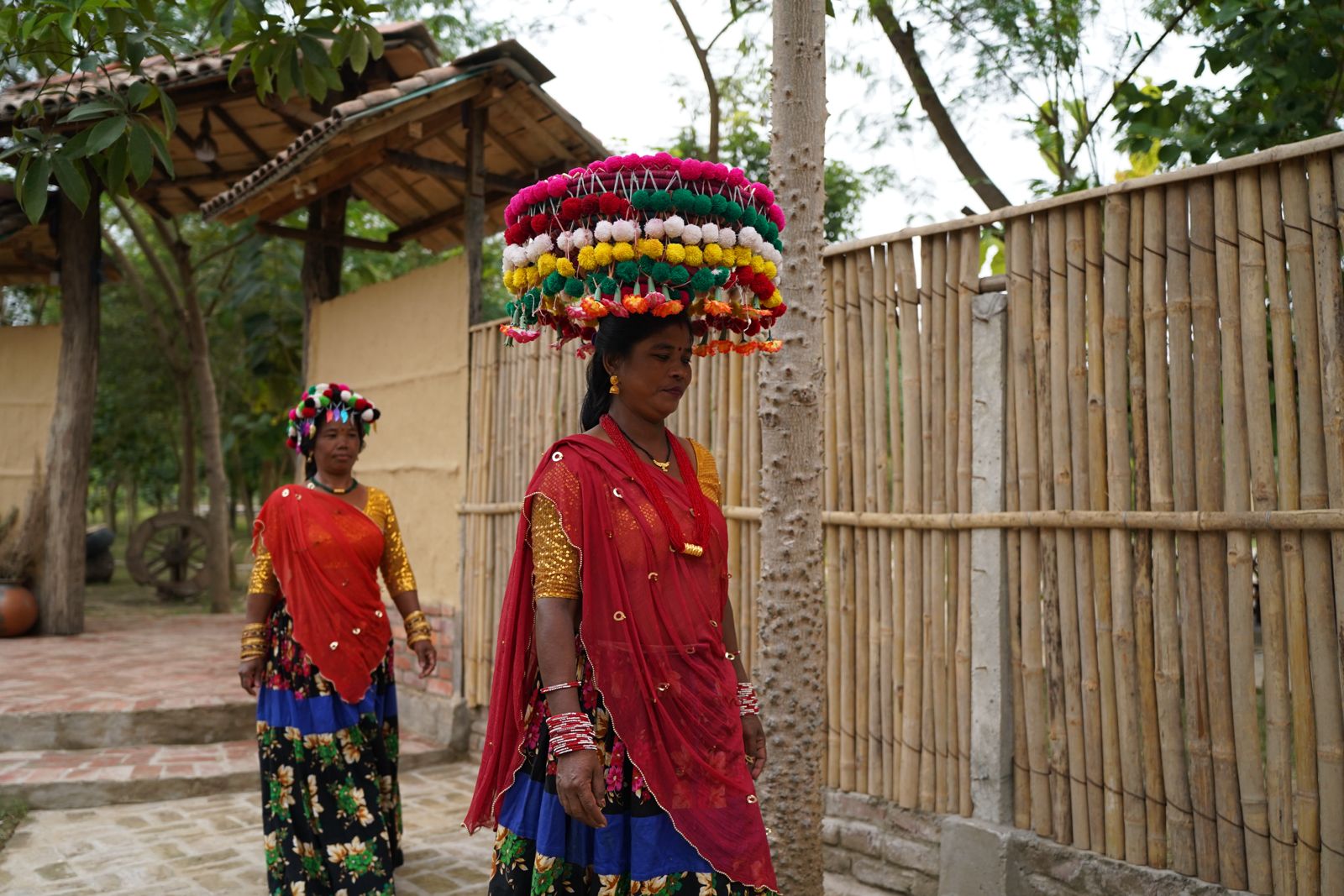
When you visit Bardiya, you’re not just stepping into a wildlife paradise—you’re entering a living, breathing cultural landscape shaped by the indigenous Tharu community. Their lifestyle has always been deeply connected to nature, and nowhere is that more visible than in the tools and everyday objects they use.
These aren’t just “old things.” They tell stories—of survival, creativity, and a deep understanding of the land. And when you slow down and really notice them, you begin to see how every object has been thoughtfully designed over generations.
Here’s a deeper look at some traditional Tharu essentials you might come across—and what they reveal about life in Bardiya.
1. Dehri & Kutli: The Art of Storing Life
Walk into a traditional Tharu home, and you might spot a large mud structure tucked into a corner. That’s a dehri—a handmade grain storage unit built using mud, straw, and natural fibers.
At first glance, it may seem simple. But it’s actually a highly refined piece of indigenous engineering.
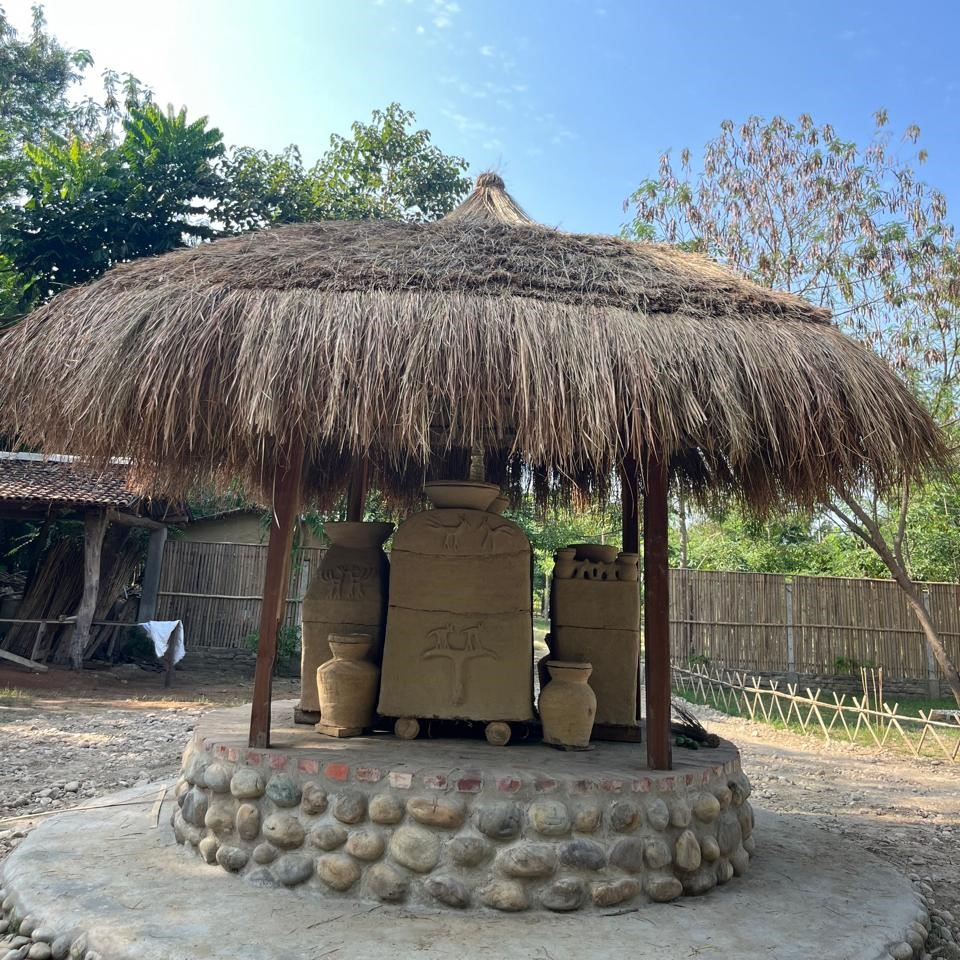
The thick mud walls act as natural insulation, keeping grains cool and dry even during hot, humid months. The mixture of clay and straw prevents cracking, while a smooth outer layer—often finished with cow dung—helps keep insects away. Some dehris are even built with small openings at the top for pouring grain and cleaning the inside.
A single dehri can store a family’s harvest for months. In many ways, it represents stability, preparation, and resilience.
The kutli (or kuthali) is a smaller version, usually reserved for storing seeds for the next planting season. While the dehri protects the present, the kutli safeguards the future.
2. Chattri: A Farmer’s Best Friend
Farming in the Terai is no easy task—especially during monsoon, when rain pours for hours and fields turn into muddy wetlands.
That’s where the chattri comes in.
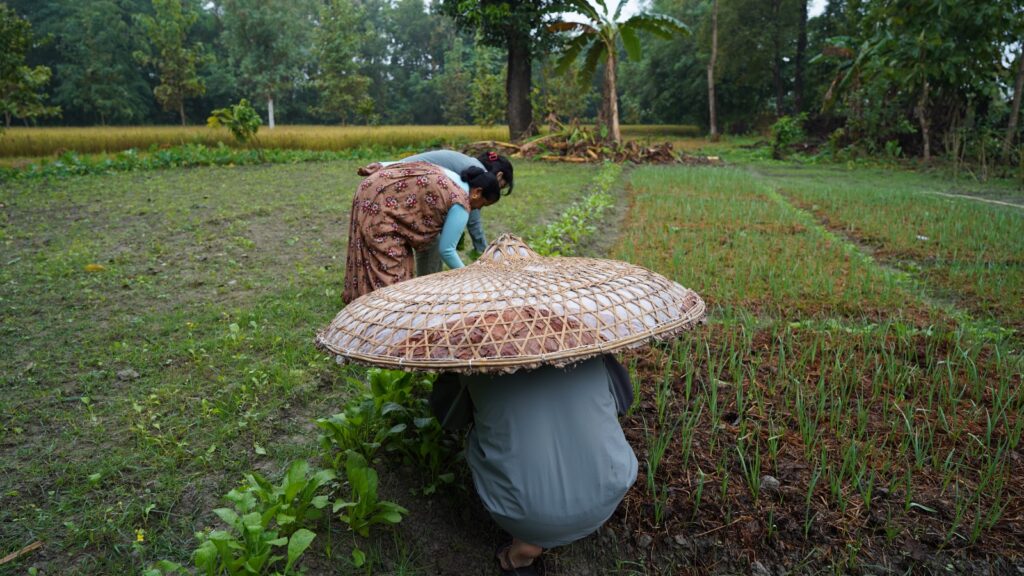
Made from bamboo frames and dried leaves, this traditional hat functions like a hands-free umbrella. It rests on the head and provides full coverage from both sun and rain, allowing farmers to work comfortably without holding anything.
What makes the chattri special isn’t just its function—it’s its design philosophy. It’s breathable, lightweight, biodegradable, and made entirely from materials found in nearby forests.
Today, plastic raincoats and umbrellas are more common. But the chattri remains a symbol of a time when people created exactly what they needed—using only what nature provided.
3. Dhadiya: Fishing the Traditional Way
Water is a central part of life in Bardiya. Rivers, streams, and flooded fields provide not only irrigation but also food.
The dhadiya is one of the most commonly used traditional fishing tools among the Tharu people. Made from split bamboo and reeds, it’s shaped to guide fish inward while preventing them from escaping.
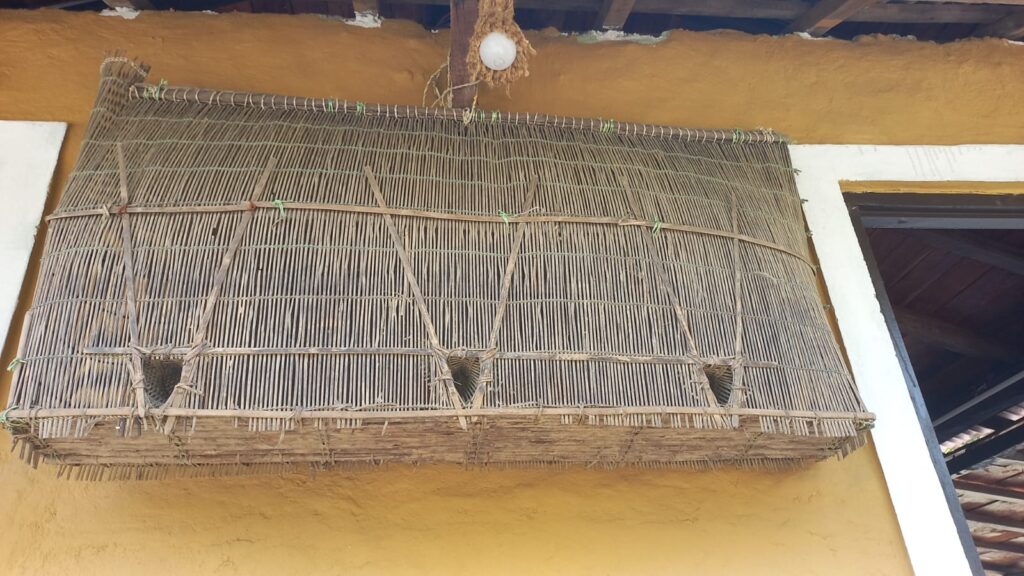
The trap is placed in shallow flowing water—often in canals or rice fields during the monsoon season. As water passes through, fish are funneled into the system and collected later.
What’s fascinating is how efficient this method is without harming the ecosystem. It doesn’t disturb the water much, and smaller fish can sometimes escape, allowing populations to regenerate.
Fishing with a dhadiya is less about speed and more about patience and understanding the rhythm of nature.
4. Dhakki (or Dhakiya): More Than Just a Basket
If there’s one object that truly represents the daily life of the Tharu people, it’s the dhakki—also known as the dhakiya.
These large woven baskets are handcrafted by women using natural grasses and shrubs collected from nearby forests. The weaving process itself is an art—requiring precision, patience, and years of practice.
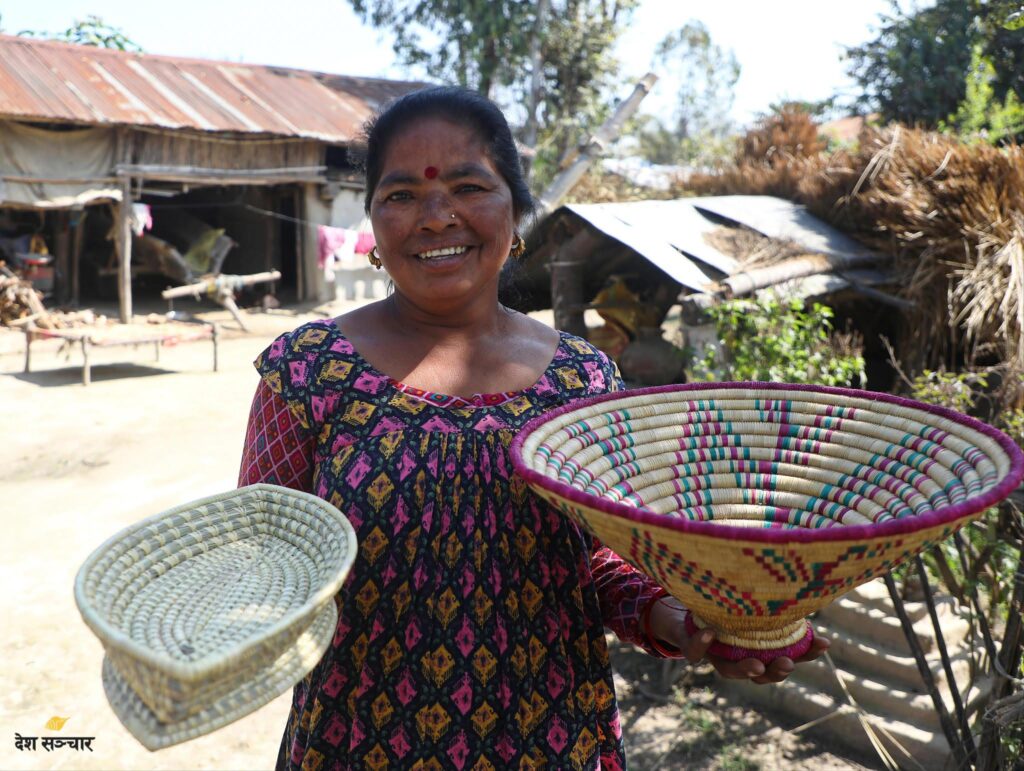
Dhakki are incredibly versatile. During harvest season, they’re used to carry crops from the fields. At home, they serve as storage containers for grains and household items.
But beyond their practical use, dhakki also carry cultural meaning.
In weddings, specially decorated baskets—often called deluwa—are used to present gifts between families. The designs, colors, and patterns can vary, depending on the occasion, adding a personal and symbolic touch.
Each dhakki tells a story—not just of function, but of identity, tradition, and craftsmanship.
5. Dilliya: Keeping the Catch Fresh
Fishing isn’t just about catching—it’s also about preserving.
The dilliya is a small bamboo basket designed to carry freshly caught fish. Unlike regular baskets, it’s woven tightly enough to hold water, keeping the fish alive and fresh until they reach home.
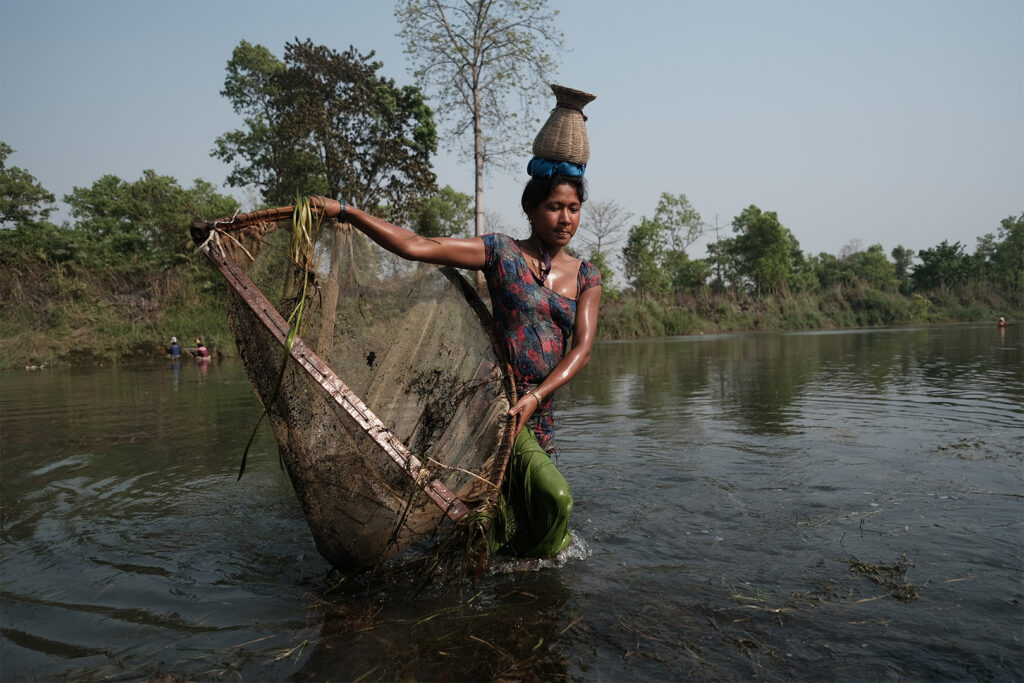
Men typically tie the dilliya around their waist while fishing, while women may carry smaller ones on their heads. It’s lightweight, portable, and perfectly adapted to the needs of riverside life.
It’s one of those tools you might easily overlook—but once you understand its purpose, you realize how thoughtfully it’s designed.
6. Lahadu & Lahadiya: The Roads Before Roads
Before paved roads and motor vehicles reached rural Nepal, transportation relied on something much simpler—and slower.
The lahadu is a wooden cart pulled by oxen, traditionally used to transport people, grains, and goods across villages. Built from locally sourced wood, these carts were sturdy enough to handle rough, muddy paths.
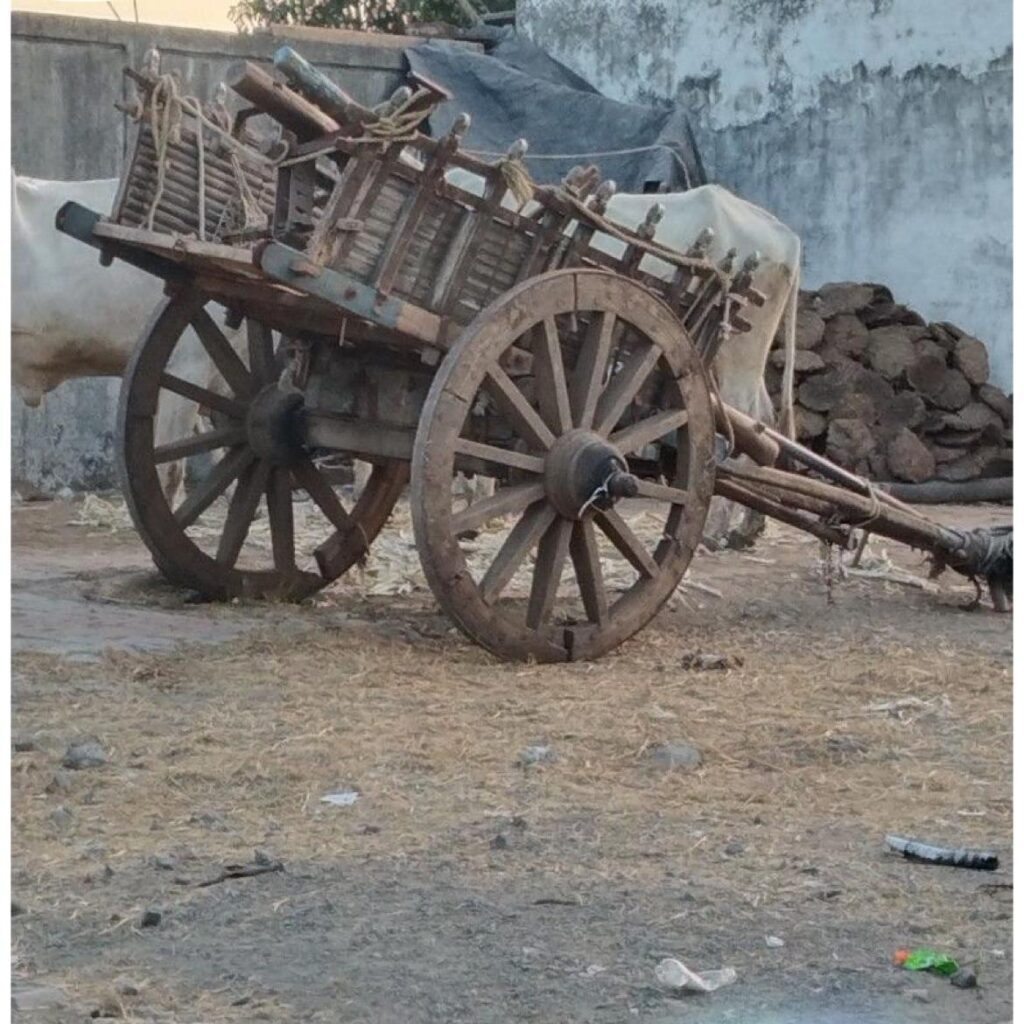
The lahadiya, on the other hand, is pulled by buffaloes and often used for heavier loads.
While these carts are rarely used today, they still hold cultural significance. In some villages, they’re brought out during festivals or used as part of cultural experiences for visitors.
Riding one feels like stepping back in time—moving at a pace that allows you to truly take in the surroundings.
7. Khatiya: Sleeping the Natural Way
In the heat of the Terai, comfort isn’t about air conditioning—it’s about airflow.
The khatiya is a traditional bed made from a wooden frame and tightly woven rope or fiber. Its open design allows air to circulate freely, making it ideal for warm climates.
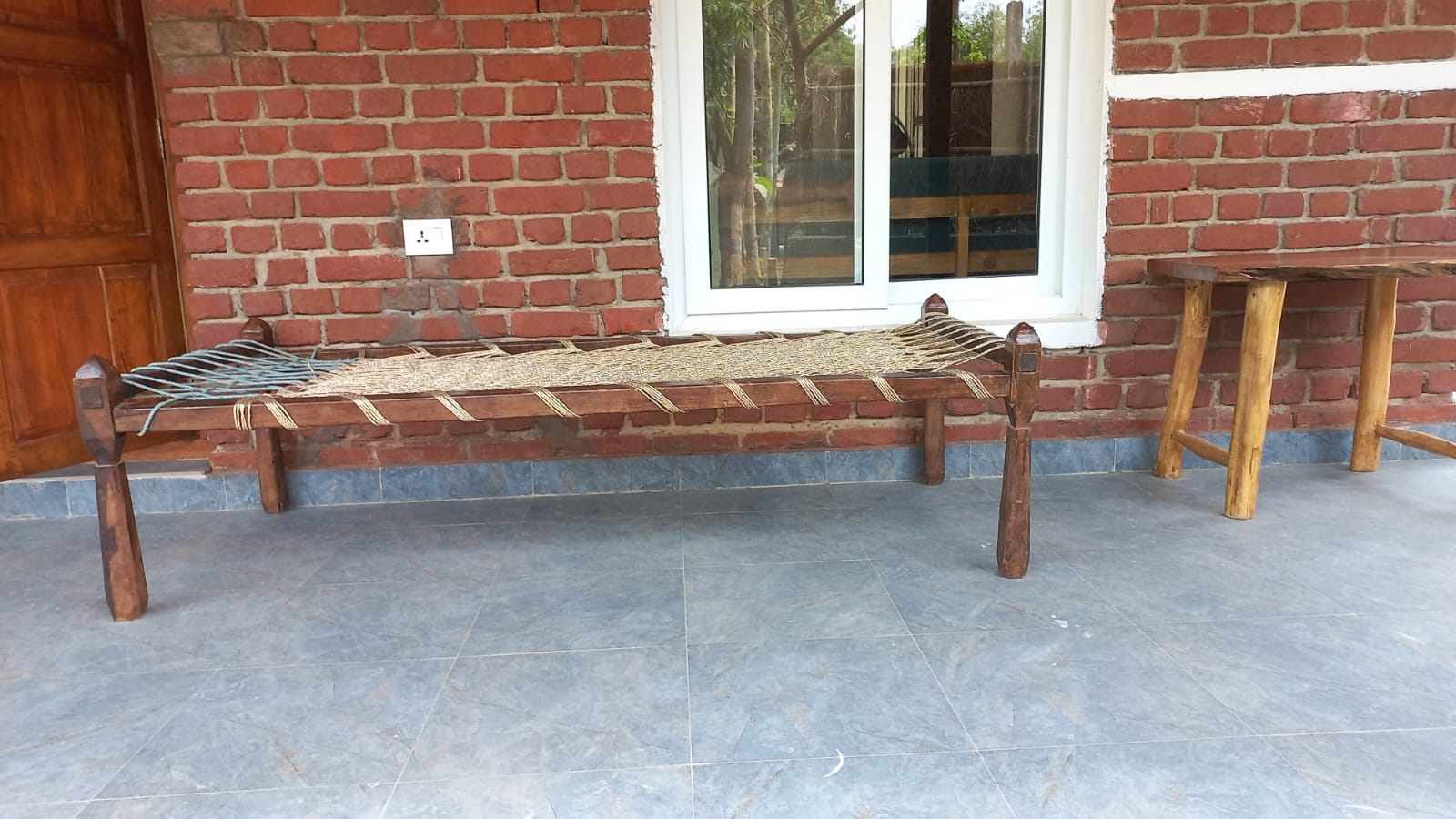
During summer, many Tharu families prefer to sleep outdoors on khatiyas—under the open sky, surrounded by the sounds of nature.
There’s also a local belief that snakes cannot climb the legs of a khatiya, which adds a sense of safety when sleeping outside.
Beyond comfort, the khatiya reflects a lifestyle that embraces simplicity and connection with the environment.
The Philosophy Behind the Items
What makes these tools truly special isn’t just how they’re used—it’s how they’re made.
Almost everything comes from nature: bamboo, mud, grass, and wood. These materials are renewable, biodegradable, and locally sourced. There’s minimal waste, and tools are often repaired rather than replaced.
This reflects a broader philosophy of the Tharu community—one that values balance, sustainability, and respect for the environment.
In a world increasingly dominated by mass production and convenience, there’s something deeply inspiring about this way of life.
Why This Matters for Travelers
As a visitor to Bardiya, it’s easy to focus on the big highlights—jungle safaris, wildlife sightings, and river landscapes. But the real magic often lies in the small details.
Noticing a dhakki resting against a wall, a khatiya in a courtyard, or a chattri in a field gives you a deeper connection to the place.
It turns your trip from a simple visit into a meaningful experience.
So next time you’re exploring a village near Bardiya National Park or relaxing at your lodge, take a moment to look closer.
Because sometimes, the simplest tools tell the richest stories.
A Living Heritage
The beauty of Tharu culture is that it isn’t locked away in museums—it’s still alive.
These tools are still being made, still being used, and still being passed down through generations. Even as modern life brings change, many families continue to hold on to these traditions.
And that’s what makes Bardiya so special.
It’s not just a place you visit—it’s a place you learn from.
A place where every woven basket, every bamboo trap, and every mud granary quietly reminds you of a simpler, more connected way of living.
Thank you for taking the time to read and explore with us. We hope this gave you a deeper appreciation of the culture, nature, and stories that make Bardiya so special.
At Bardiya Nature Lodge, we’re more than just a place to stay; we’re a space where nature, culture, and comfort come together. Nestled near the serene rivers and close to the wild beauty of Bardiya National Park, our lodge offers an immersive, eco-friendly experience that connects you to the heart of this region.
If you’re looking to experience Bardiya in its most authentic and peaceful form, we’d love to host you.
Get in touch with us today to plan your nature-friendly stay.