


Explore Bardiya
A journey into one of Nepal’s last great wildernesses—where dense forests, open grasslands, winding rivers, and rich local culture come together in perfect balance.
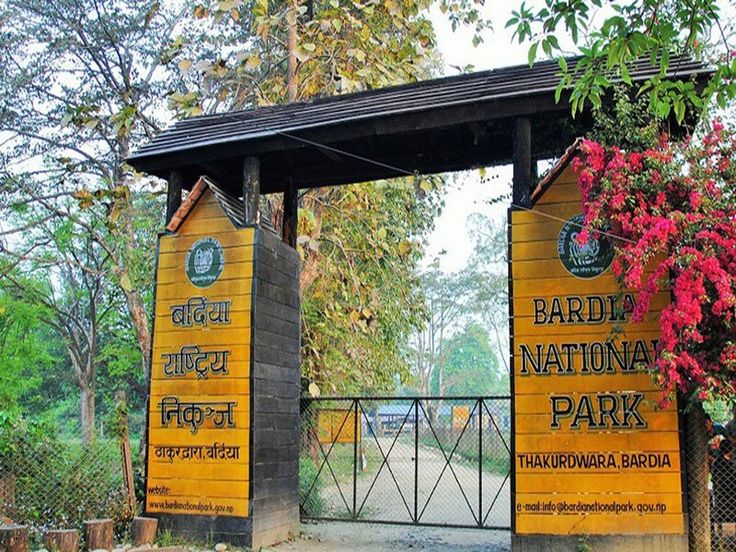
Bardiya National Park
Bardiya National Park is Nepal’s largest and most undisturbed protected wilderness in the lowland Terai, spanning nearly 968 square kilometres of riverine forests, tall grasslands, and floodplain ecosystems. Far less crowded than other parks, Bardiya offers a rare sense of raw, untouched nature—where wildlife roams freely, and silence is broken only by birdsong or the distant call of animals.
The park forms a vital conservation landscape, providing sanctuary to some of South Asia’s most iconic and endangered species, making it one of the most rewarding destinations for nature lovers and wildlife enthusiasts.
Big Wildlife Encounters
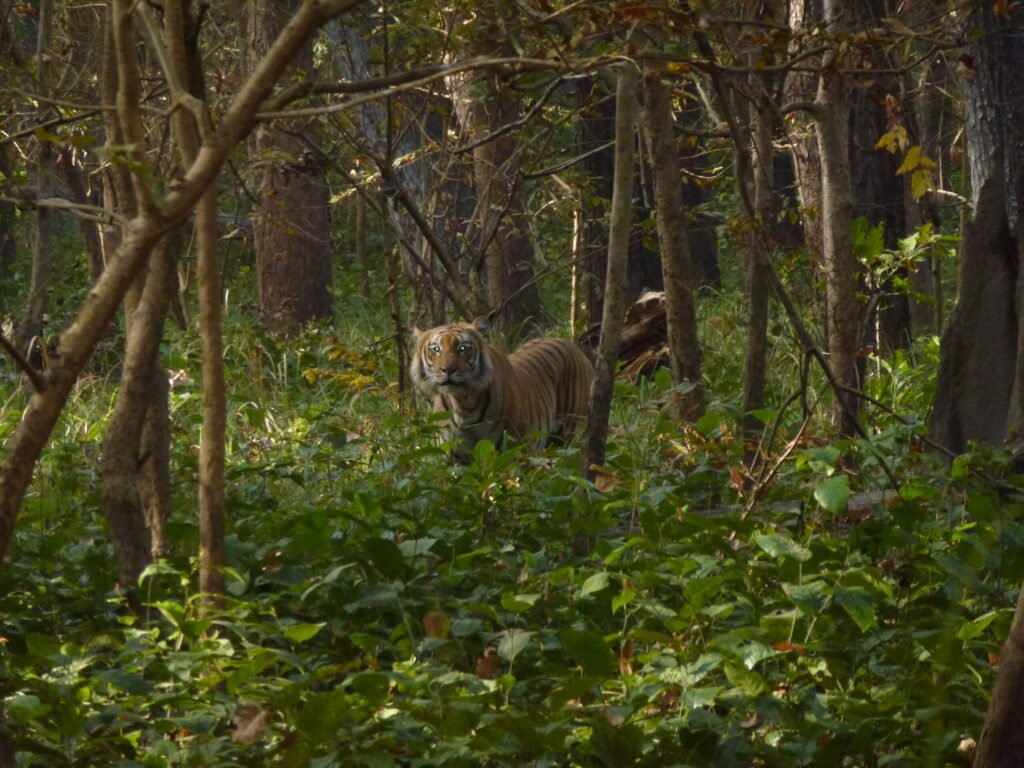
Royal Bengal Tiger
Bardiya is considered one of the best places in Nepal to spot the elusive Royal Bengal tiger in the wild. With one of the highest tiger densities in the country, patient visitors are often rewarded with tracks, sightings, or unforgettable moments along riverbanks and forest trails.
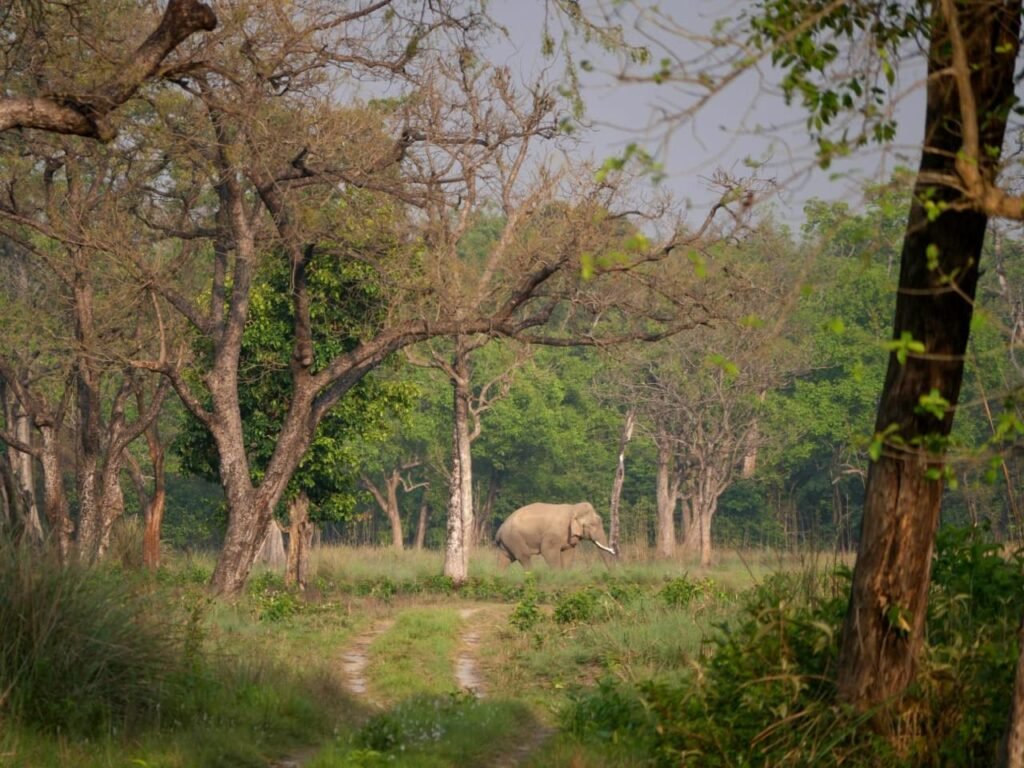
Asian Elephants
The park supports a significant population of Asian elephants, with around 120 individuals recorded. These elephants move naturally across vast landscapes, including the internationally important Khata Biological Corridor, which connects Bardiya with India’s Katarniaghat Wildlife Sanctuary—allowing safe migration for elephants, tigers, and other large mammals.
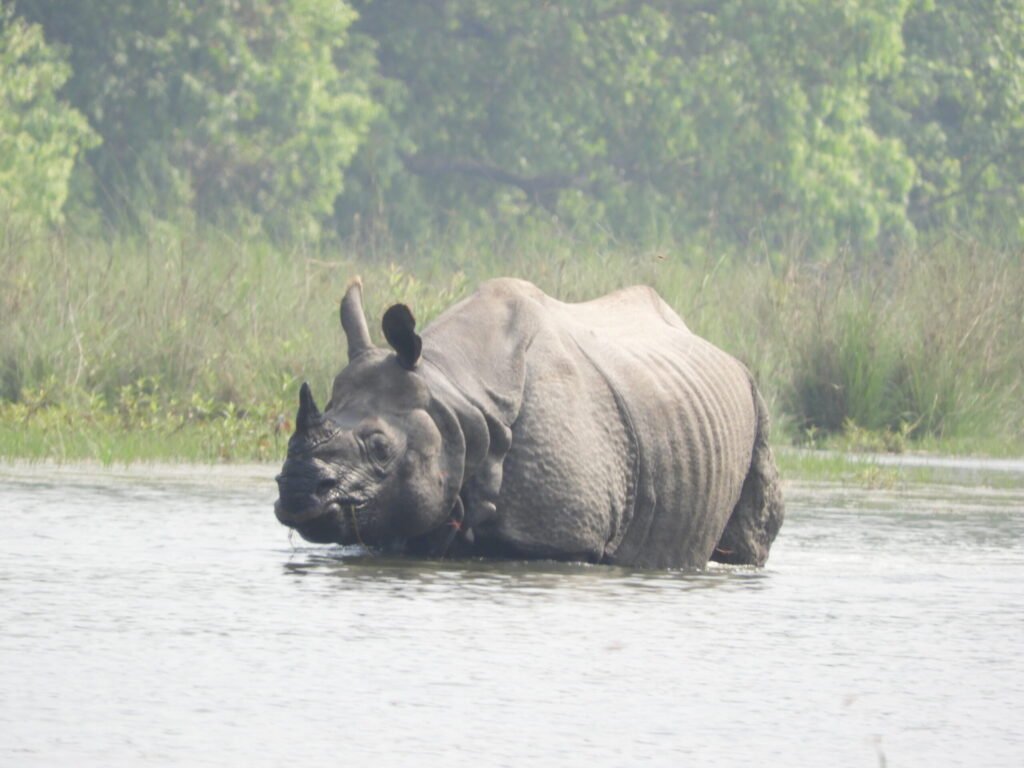
Greater One-Horned Rhinoceros
Once absent from the region, one-horned rhinoceroses have been successfully reintroduced through careful conservation efforts. Today, they roam Bardiya’s grasslands and riverine habitats, sometimes crossing freely between Nepal and India depending on water levels and seasonal conditions.
Diverse Species All Around
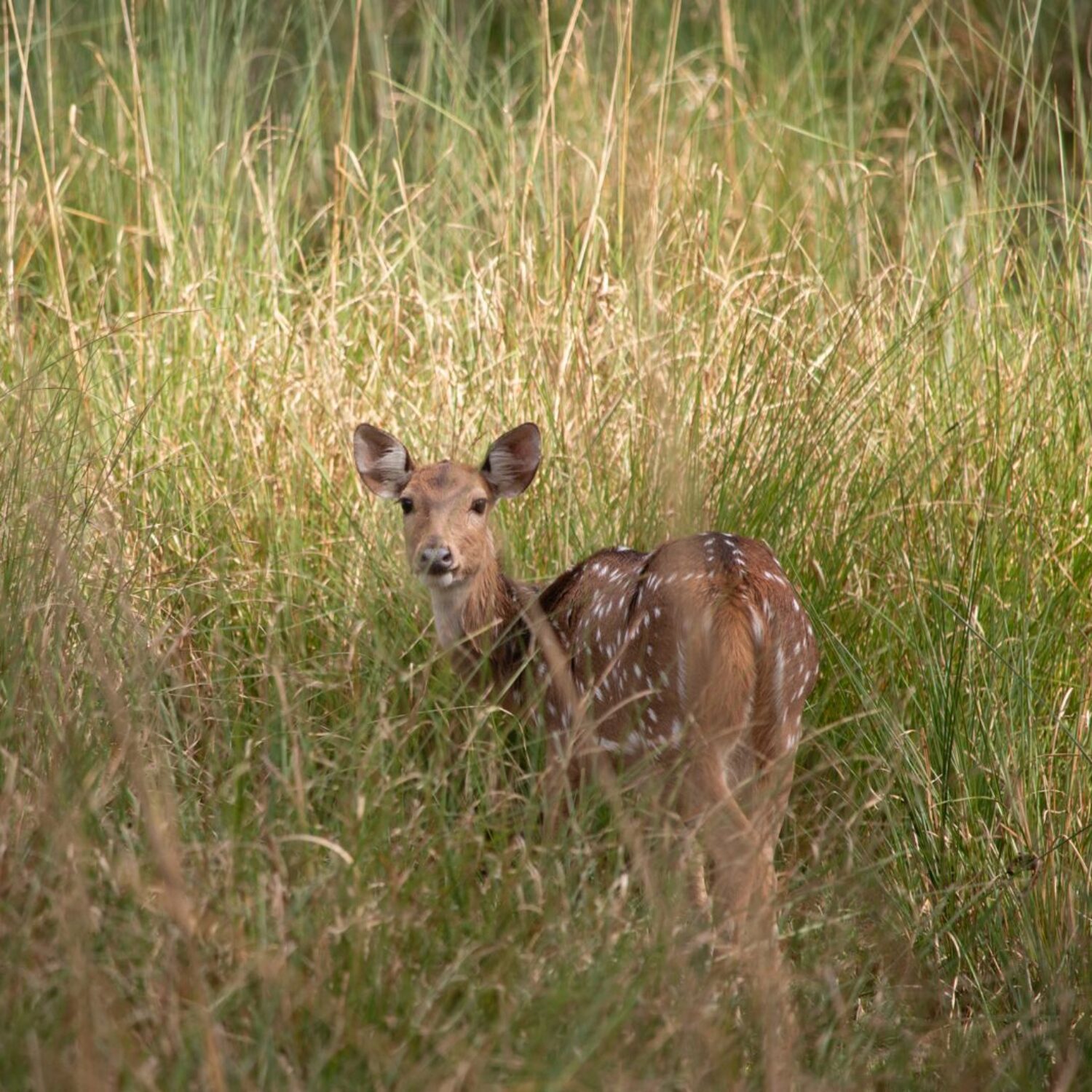
Beyond its famous megafauna, Bardiya is home to an extraordinary range of mammals and reptiles. Visitors may encounter spotted deer, swamp deer, blackbuck, wild boar, leopards, and smaller carnivores hidden deep within the forest.
The park’s rivers and wetlands shelter ancient reptiles such as gharials and marsh mugger crocodiles, while the Gangetic river dolphin—one of the world’s rarest freshwater dolphins—can occasionally be seen surfacing in the Karnali River.
Birdlife & Seasonal Migration
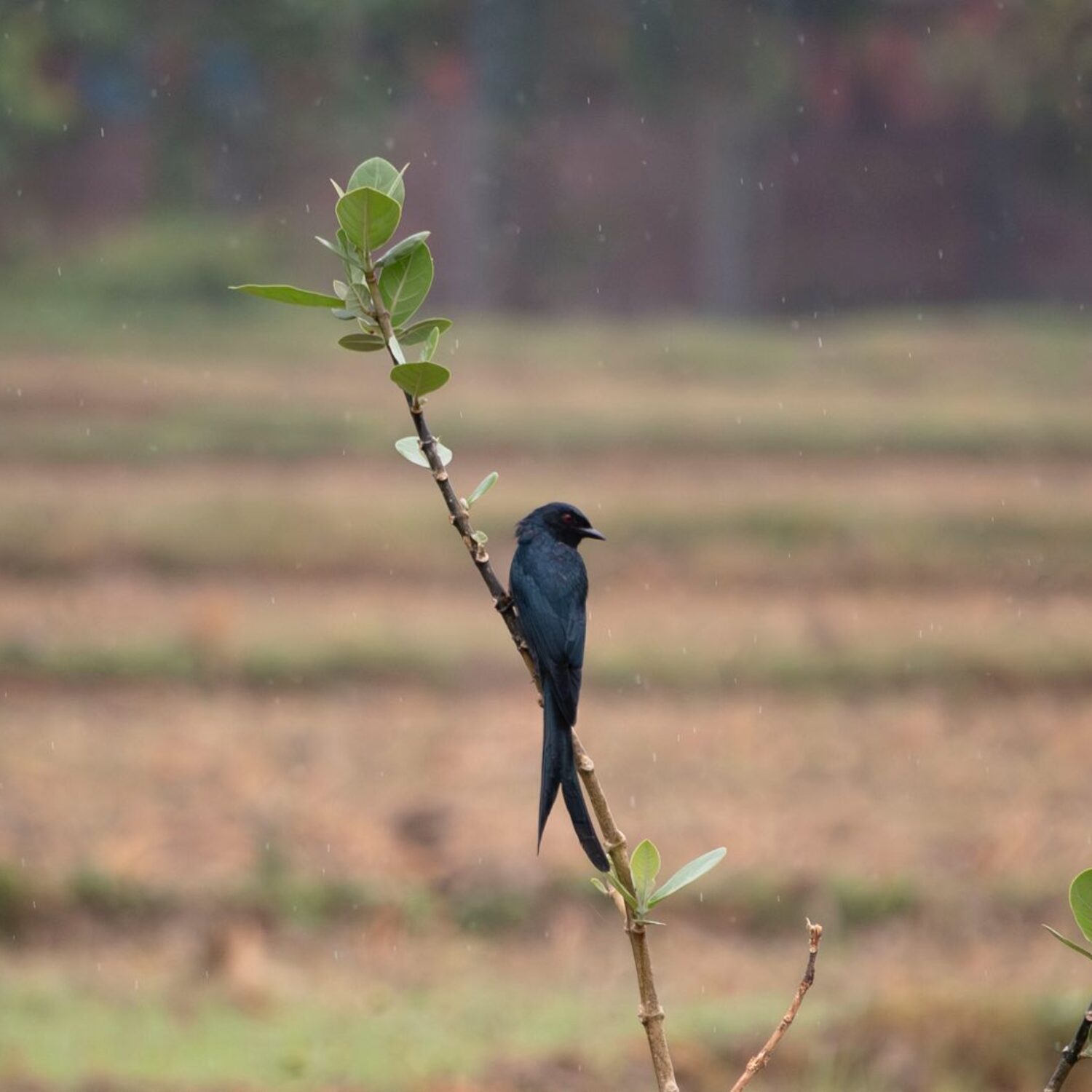
With over 400 recorded bird species, Bardiya is a paradise for birdwatchers and photographers. The park protects important grassland and wetland habitats for rare and endangered birds such as the Bengal florican and sarus crane.
During winter, migratory birds arrive from colder regions, filling the skies and riverbanks with vibrant activity. Whether you are a seasoned birder or a casual observer, Bardiya offers exceptional birding year-round.
Landscape & River Life
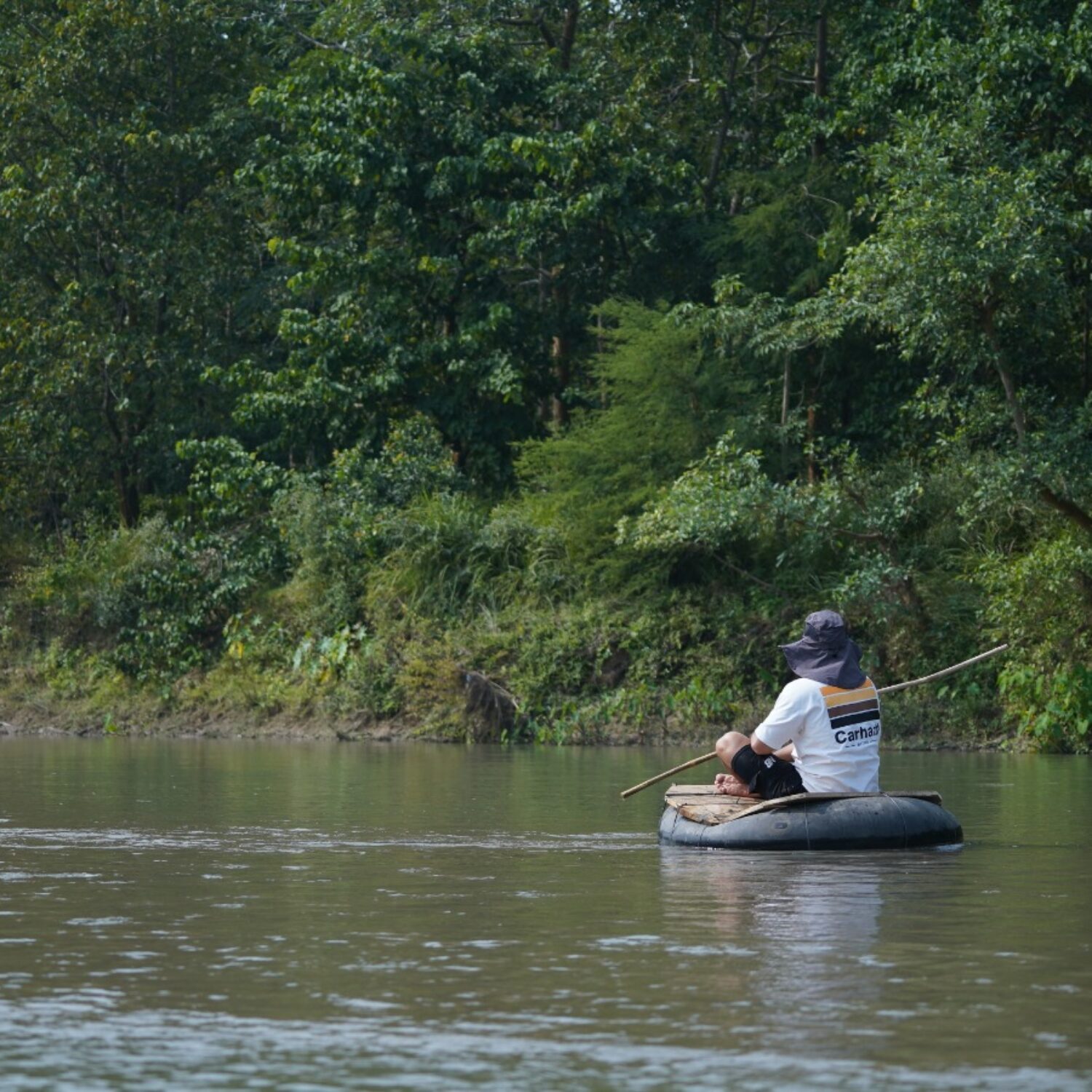
Two major rivers—the Karnali and Babai—flow through the heart of Bardiya National Park, shaping its diverse ecosystems. Along their courses lie riverine forests, wetlands, oxbow lakes, and sandbanks that sustain fish, crocodiles, birds, and mammals alike.
These waterways also create dramatic natural settings for canoeing, rafting, fishing, and riverside wildlife sightings, offering a unique perspective on life in the jungle.
Things to Do in Bardiya
Bardiya National Park
Explore the heart of the region through jeep safaris, guided jungle walks, and river activities inside Bardiya National Park. This is where wildlife encounters, pristine landscapes, and raw wilderness come together.
Dalla Community Forest Walk
Take a guided walk through the Dalla Community Forest, a buffer-zone forest rich in birdlife, deer, and native flora. It offers a quieter, more intimate nature experience close to local communities.
Dalla Community Tree House Overnight Stay
Spend a night in a community-run tree house overlooking the forest. Fall asleep to jungle sounds and wake up surrounded by nature—an unforgettable, immersive wilderness experience.
Dalla Village Tour & Tharu Cultural Experience
Visit Dalla village to experience authentic Tharu culture, including traditional homes, daily village life, and vibrant Tharu dance performances at the community centre.
Khotiyaghaat Bridge & Karnali/Geruwa River
Visit the longest bridge in Nepal, stretching across the Karnali (Geruwa) River. The area offers stunning sunset views, flowing river landscapes, and views toward the India–Nepal border.
Rajapur – The Old Trade Town
Explore Rajapur, a historic trade town shaped by river commerce and cultural exchange. Its traditional layout and local life offer a glimpse into Bardiya’s past.
Village Tours & Tharu Lifestyle
Join guided village tours to learn about Tharu traditions, farming practices, cuisine, and the deep connection between local communities and the surrounding forests.
Chisapani Bridge
Visit the iconic Chisapani Bridge, where the Karnali River emerges from the hills into the Terai plains. It’s a scenic stop known for wide river views and dramatic landscapes.
Blackbuck Conservation Area
Explore the Blackbuck Conservation Area, home to the endangered blackbuck antelope. This protected grassland showcases successful community-led wildlife conservation.
Karnali River Rafting
Experience river rafting on the Karnali—Nepal’s longest river—offering both adventure and serene stretches through remote landscapes and riverine ecosystems.
Elephant Center
Visit the local elephant center to learn about elephant conservation, care, and their role in wildlife protection within the Bardiya landscape.
Explore Bardiya with BNL
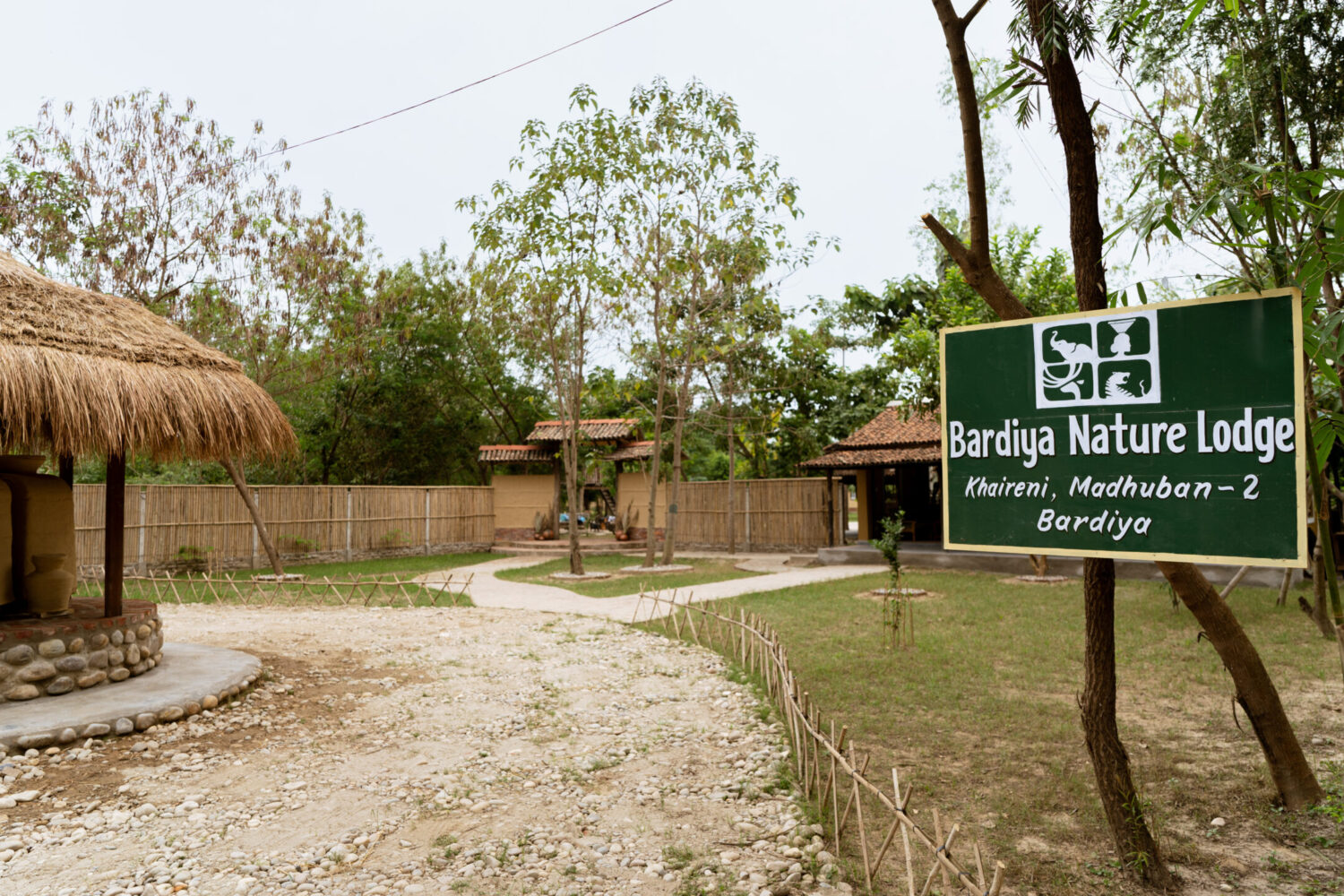
Staying at Bardiya Nature Lodge places you at the edge of this extraordinary wilderness, close enough to feel immersed, yet comfortable enough to truly relax. Our location—on the Khata Migration Corridor—local expertise, and commitment to responsible tourism allow you to experience Bardiya in a way that is authentic, meaningful, and unforgettable.
Nature here is not a backdrop; it is the experience itself.